Quick answer: a Montessori-friendly toy isolates one skill, gives the child a clear control of error, uses natural materials and fits the hand. It does not need a screen, a battery or an adult to make it work. There is no single global “Montessori certification” for toys, so avoid suppliers who claim one without naming the body.
Montessori is one of the strongest search terms in wooden toys, and one of the most abused. Almost any wooden toy can be photographed on a neutral background and called Montessori. For a buyer, the risk is a range that looks the part but does not deliver the play value parents expect.
The design principles that matter
- Isolation of difficulty. One skill at a time: posting, threading, sorting or balancing. A toy that asks a child to do five things at once is not a Montessori work.
- Control of error. The material shows the child what went wrong. A shape that only fits one way, a block that only balances when it is centred.
- Natural materials. Wood, cotton, wool and water-based finishes. The material should feel good in the hand.
- Real size. A toddler's hand needs a 3–5 cm grasp, not a miniature ornament.
- Repetition. The action can be repeated without an adult resetting the toy.
Products that sell
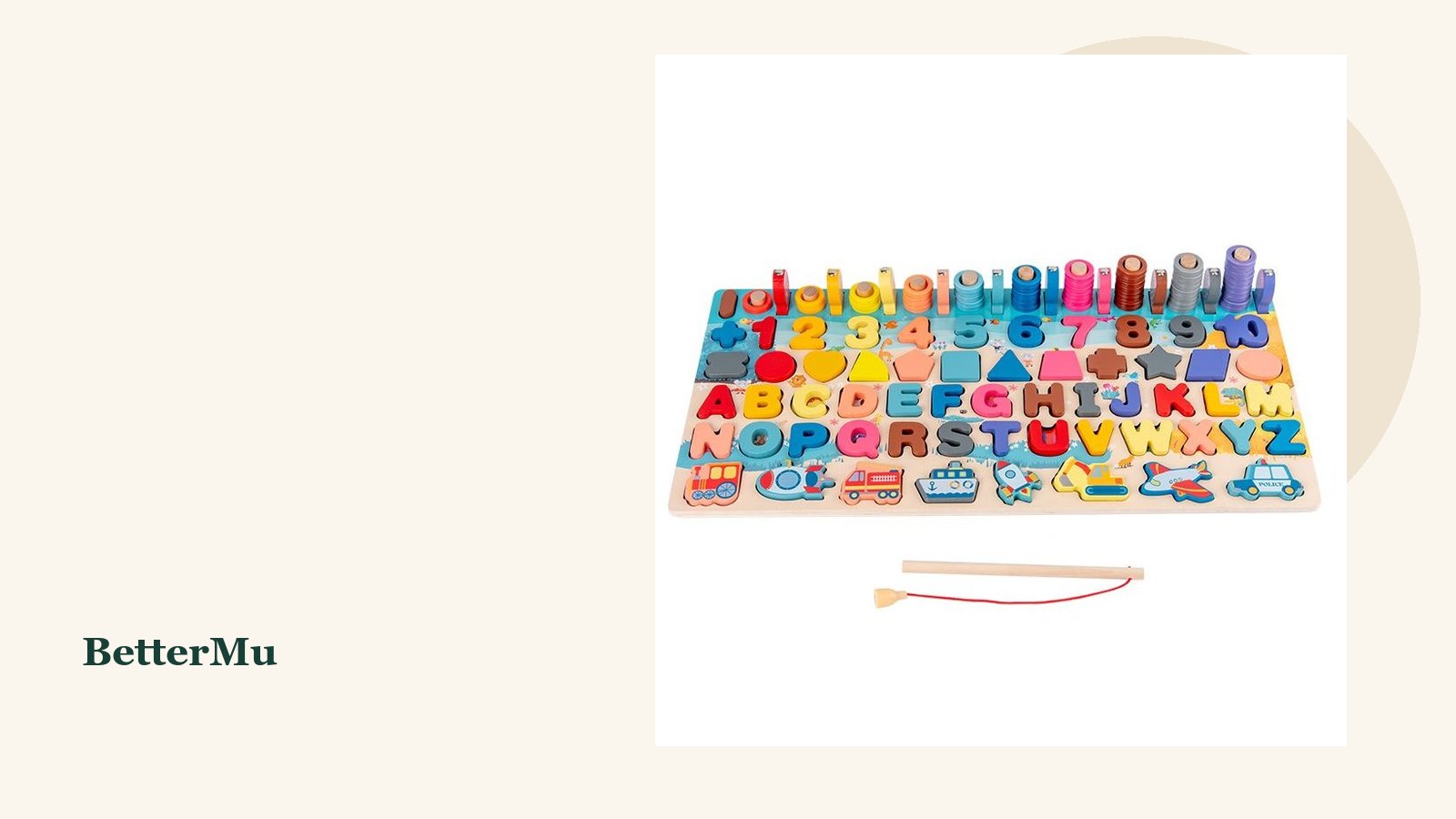
The strongest sellers in our range are the activity board with fishing, the ladybird magnetic bug-catching toy, the number blocks, the shut-the-box game and the rainbow xylophone. They share a clear action, a natural finish and a price point that works for a specialty retailer.
For nurseries, the climbing arch and the balance board are strong because they support movement and open-ended play. For gift stores, the bead maze and the chunky puzzles are easier to merchandise.
Avoiding pseudo-Montessori
Ask the supplier what skill the toy isolates and how the child knows they have done it right. If the answer is “it is wooden and natural”, the product is not Montessori — it is just wooden. There is nothing wrong with a wooden toy that is not Montessori, but the price premium should be earned.
Also be careful with age claims. A toy with small parts cannot be sold as 0–3, whatever the Montessori tradition says. Safety grading comes first.
Building a range
A small Montessori range works best with three price tiers: an entry puzzle or stacker, a mid-price activity board, and a larger movement or furniture piece. Keep the finish consistent — natural oil or a muted paint palette — so the range photographs as a collection.
Packaging and parent communication
Parents want to know what the toy does. A small card that names the skill, the age range and one way to present it is more useful than a long brand story. Keep the plastic out where you can; a paper wrap and a recycled board box suit the positioning.
The short version
Montessori is a design discipline, not a label. Buy products with a clear action, a control of error and a natural finish. Be honest about age grading. Build a three-tier range and explain the skill on the pack.
Frequently asked questions
Is there an official Montessori certification for toys?
No single global body certifies toys as Montessori. Some Montessori organisations accredit schools, not products. Treat a certification claim without a named body as marketing.
What age do Montessori toys start?
From around 6 months for a simple object-permanence or posting toy, through 2–3 years for activity boards and number work.
Can you make a custom Montessori board?
Yes. We can change the activities, the board size and the finish, with a sample before production.
Which materials are best?
Solid wood, plywood and E1-grade MDF with water-based finishes. Avoid high-gloss plastic effects if the positioning is natural.